
Social media platforms have been an indispensable part of citizens’ daily life. People wake up next to social media, having breakfast when on social media, or hanging out while updating their journey on social media. This deep engagement makes me question myself why social media platform is so irresistible. Instagram – one of the most dominant platforms – provides users with some attractive affordances, noticeably ability to form identity and the maximizing benefits of selfies in personal/brand marketing. Yet, one affordance of Instagram remains controversial since it refers to the process of surveillance, in which Instagram permit corporations and government to supervise citizens using personal database. In the essay, the author would first touch upon a common background of Instagram, then focus on discussing the three affordances above, and close up by giving a personal evaluation on whether those affordances are beneficial or not.
To begin, the author would provide some facts about one of the most dominant social media platforms in the world, a piece of “big four” – “Instagram”. Created 9 years ago by Kevin Systrom and Mike Krieger, then sold to tech giant Facebook, Instagram peaked a significant number of users in 2019 – 1 billion active accounts per month (Statista, 2019). The app highly concentrates on photos/short videos sharing, allows users to follow each other as well as increases virtue interaction. The simplicity yet elegant structure filled with square photo frames has won the user’s attention. Yet more than just visual content, Instagram has its secret sauce to vary itself from Pinterest or Tumblr and grow as an empire. It lies in a photo’s “impressive” effect, the latest trends, and related hashtags. The way one photo is posted on Instagram is considerably different from other platforms. While Facebook focuses on “the moment”, Pinterest is about “what one might do in the future” (“pin”), and Tumblr is “aesthetic” vibes, Instagram pursues a combination of those three, thus it pulls out one’s inner “visual voice” (FAT GUY MEDIA, 2018). The Instagram photo should not be a random one but are the bests with reasonable lighting effects, layout, colour, and so forth. As being one of the most considerable platforms, Instagram brings about certain affordances/constrains for users (to clarify, affordance refers to certain things that media platforms enhance people to do, rather than just “button, screens, and operating systems”) (Bucher & Helmond, 2018). In the following paragraphs, the author would analyze three affordances brought about by Instagram, especially in terms of “constructing one’s identity”, “selfies” and “data surveillance”.
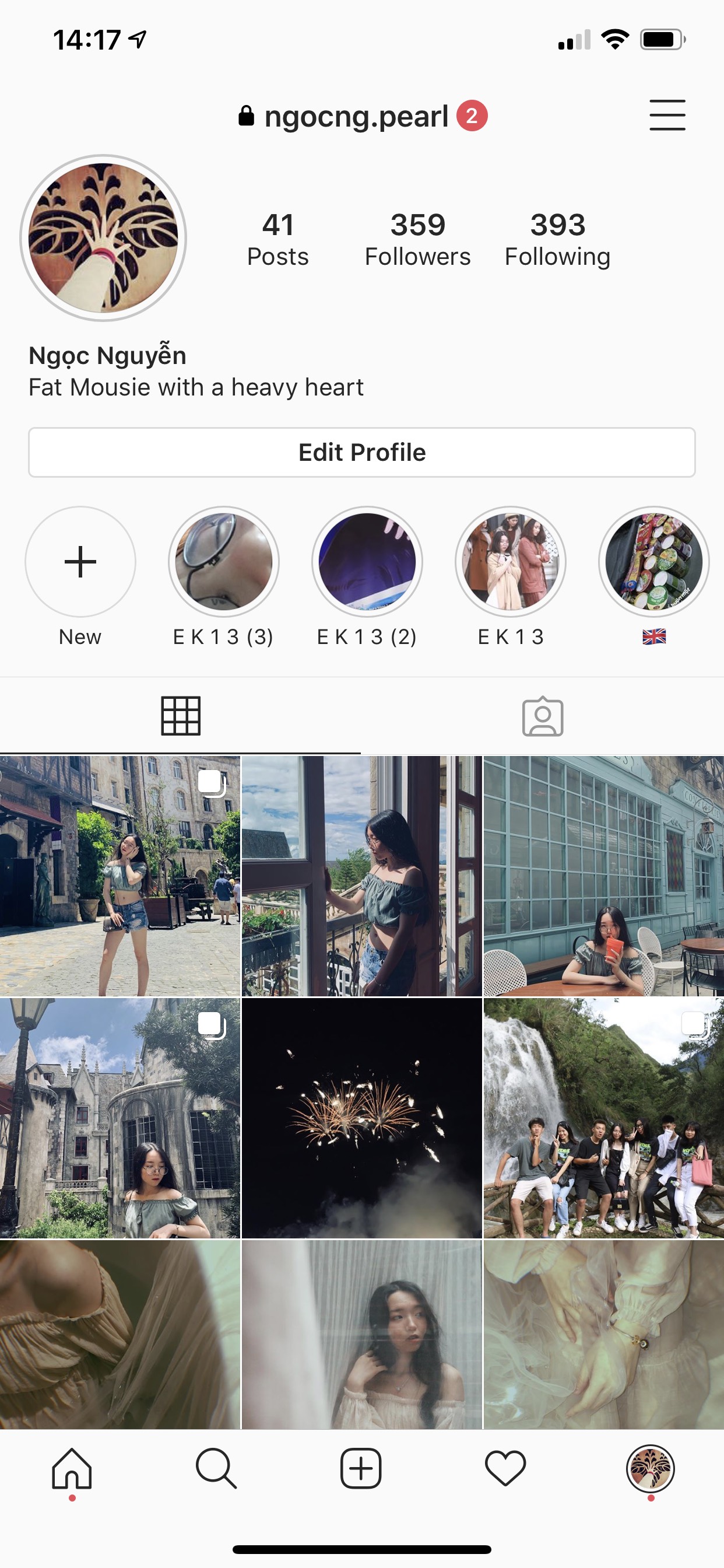
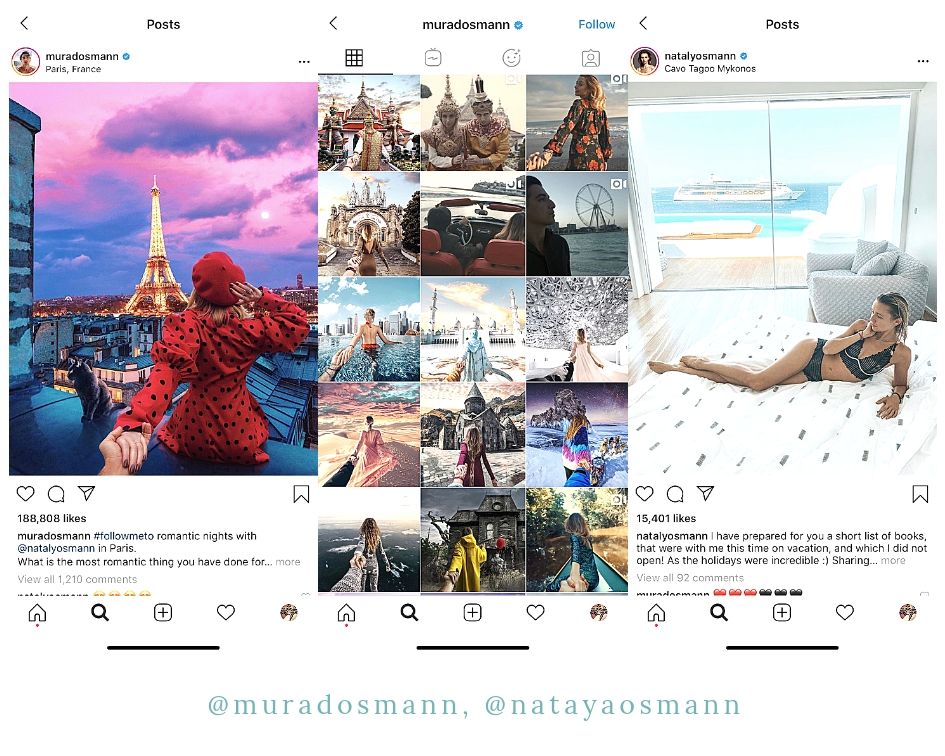
Firstly, any user is capable of constructing and changing virtual identity. Since users can create their own nickname, “bio”, “story highlights”, photos and captions by themselves, the facts displayed are highly selective based on their will. Therefore, on Instagram, anyone can think of a dream identity and “bring this self into being” (Marwick, 2013). Naturally, many people have tendency to desire and to display a better version of one’s self in public: more beautiful, stylish, having good relationships, pursuing a cool healthy lifestyle, and so forth. And it turns out that the followers would love to “heart” and “follow” the above types of influencers (which explains why hashtags such as “#richkidsofinstagram” often get enormous numbers of “hearts” and followers). For example, one of the most popular travel blogs on Instagram belongs to Murad Osman and his wife Nataya Osman. By looking at his Instagram “bio”, the guy turns out as one successful influencer who enjoys luxurious trips all around the world every day. His wife can be seen as one charming, stylish lady, and their love is admirable. Yet barely can the Osman’s followers know his/her true personalities or the hardships in their lives. Through perfect photos, the Osman resembles a happy couple who live to travel and explore – what a dream life!
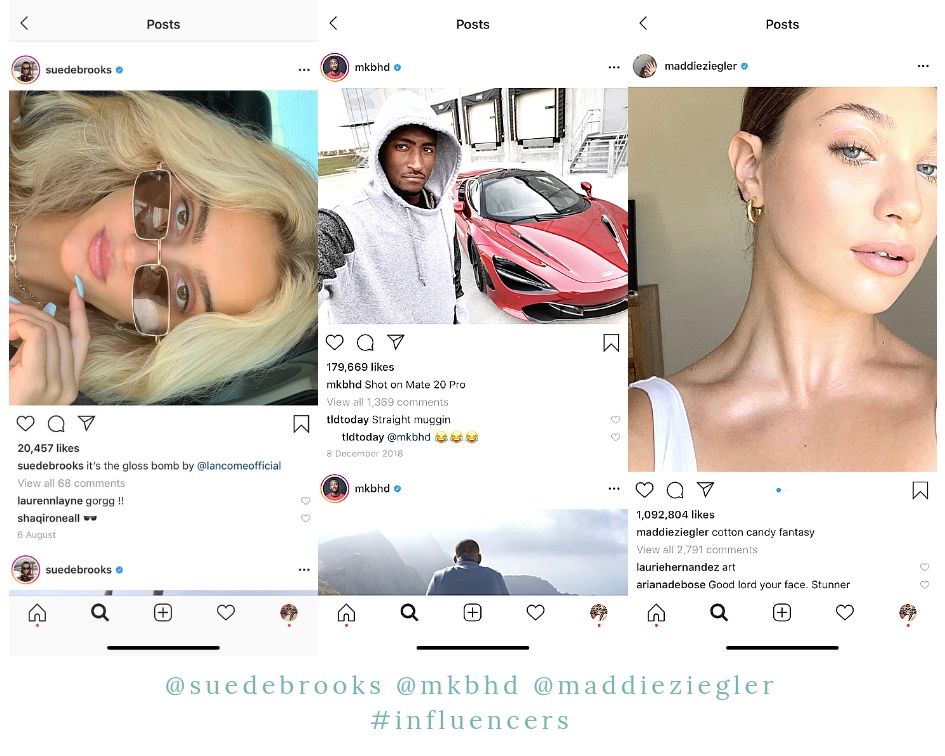
Secondly, Instagram enables users to post “selfies” as one method of marketing self-popularity and brand awareness, thus achieves reputation and monetary values. With the main concentration on photos – Instagram makes eye-catching marketing strategy to be of its utmost effectiveness (Marwick, 2015, pp. 138). Along with “heart”, comment and share features, selfies can be spread widely in many groups of users. Thus, “selfies” – or the digital pictures of oneself – are important to celebrities, Instagram influencers and “microcelebrities” (people that are popular to certain groups of users) (Abidin, 2016, pp. 3). For individuals’ promotion, since selfies are self-commercial, users can promote personal popularity by constructing their profile, uploading high-quality selfies and sharing some moments with followers. In fact, “many of the most followed accounts are packed with selfies” (Marwick, 2015, pp. 138).
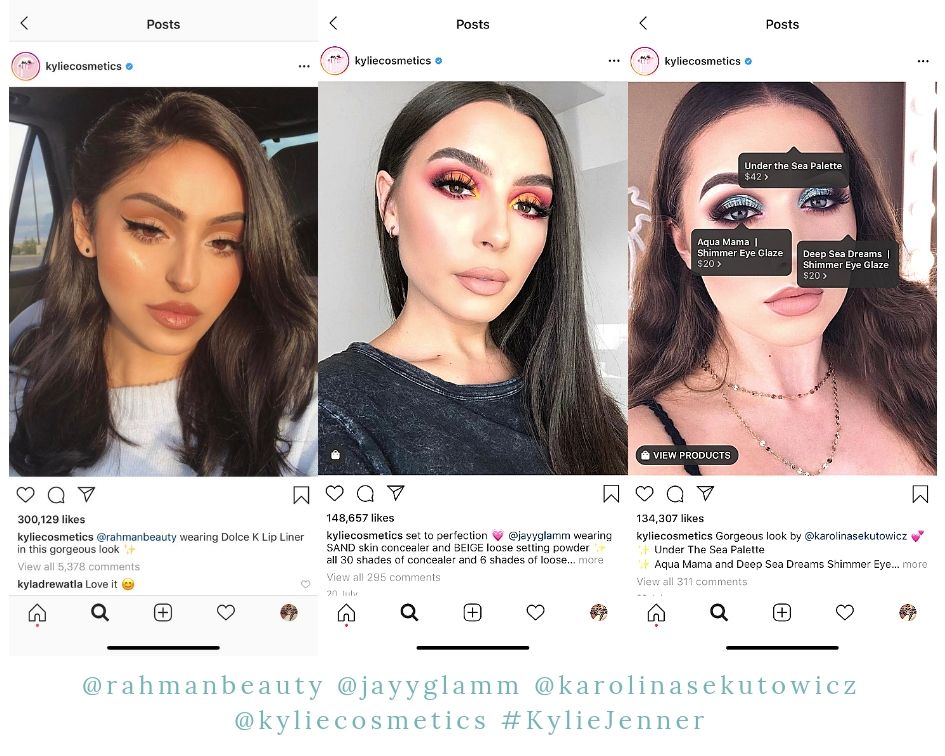
For brands’ promotion, Instagram empowers a “selfie-based marketing” which raise brand awareness. Virtual space is now a part of daily life. With massive numbers of followers from a few thousand to millions, the selfies of influencers (featuring products) will increase the level of engagement of that product itself and the brand name, thus boost consumption (Abidin, 2016, pp. 7). Besides, because people tend to look up to the ones they followed, thus the product marketed would receive positive credibility as well. The more “heart” and “share” a “selfie-with-product” received, the more recognition and credibility the brand received. By using the fame of celebs/micro-celebs/influencers to advertise for the products, companies can influence customers’ purchasing habit. And, the influencers’ ability is not limited in the content producing and self-branding anymore, it is broadened into the field of promotion. This process results in a win-win situation, when the brands successfully advertise products and Instagram stars earn more pocket money. For examples, many beauty bloggers wore Kylie Cosmetic’s makeup in their selfies to promote the brand.
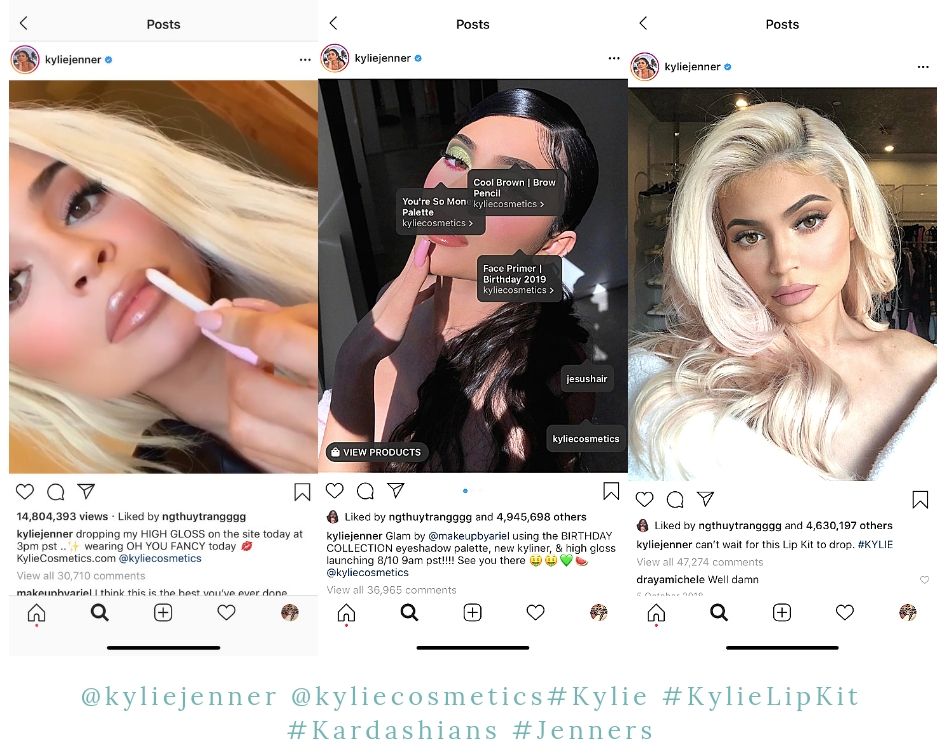
It is more particular when the influencers themselves are brand-owners, such as the Kardashians. Kylie Jenner posted several photos of herself using her products. With a dream number of followers (144 million in August 2019) and the Kardashians’ background, Kylie has a considerable advantage in advertising her brand-name and get the people to purchase for Kylie Cosmetics to achieve Kylie’s beauty.
Thirdly, any popular social media platforms, including Instagram, have permitted the process of surveillance, which might threaten people’s privacy. Similar with many other platforms such as Facebook, Twitter, LinkedIn, when users tick the “terms and conditions” agreement box, they have granted that social media the right to “[…] host, use, distribute, modify, run, copy, […]” their posts, personal data, and devices (Instagram, 2018a). This process is a part of “surveillance” – a situation when government and companies can manipulate their citizens using the information provided (Marwich, 2012, pp. 380). The type of information collected could be the things posted public, the personal transactions conducted inside that platform, the way people use the platform, and so forth. This database is then shared with “advertisers”, third-parties, “researchers”, the “law enforcement”, and definitely Facebook – Instagram’s parent company (Instagram, 2018b). Very few users pay attention to these policies, and if they are aware of what might be done with their data, no one really cares. Apart from a three-month logout and permanent delete of the account, there is no appropriate measure to deal with this data surveillance. Although on Instagram, users can set their account “private”, or a “close friends” list and other works to enhance level of privacy. Still, all activities conducted on the Internet leave “digital footprint” behind. For instance, Instagram along with its parent company granted permission for police to use data sources via data surveillance company (ACLU Northern California, 2016). Geofeedia – a location-based analytics platform – can map out the protesters’ locations and what online activities are made, right in the centre of the protesting zone. Using this information, police can target or even catch the wrong-doers just a few minutes after their posts went public. The case actually happened in the city Baltimore (Maryland, US), when police stopped some high school kids that were planning on joining the protesters, right after these kids discussed it online (The Verge, 2016). Consciously or not, users are handling the control of privacy to capital corporations and government.
Every rose has its thorns. The affordances may turn out good or bad, depending on the purpose of the users and corporations themselves. “Constructed identity” is acceptable if it does not go too far from its real-life person because after all, Instagram and other social media platforms together enhance the people to express the authentic version of themselves without hesitation. “Selfie” is one pivotal practice to boost personal branding and brand marketing, thus results in benefits. On the other hand, most of the social media platforms permit activities of surveillance, which affect the users’ privacy control and probably their basic rights. Unconsciously, it is frightening to know that the government is engaging in individuals’ daily life and private stuff. Yet, to be fair, if the consideration is national security then surveillance is one measure to ensure citizens’ safety. In brief, the people should at least be aware of what types of information and how they will be exploited/supervised by the authority in order to protect themselves. Balancing virtual life and real-life requires efforts, but it is one necessary thing to do.
To sum up, Instagram – the photo-based platform – is one of the most popular social platforms. It provides users with three main affordances. First, the ability to construct a virtual identity; second, the marketing development using selfies; and lastly, the process of surveillance granted to corporations and government.
Pearl.
References
Abidin, C. (2016). “Aren’t These Just Young, Rich Women Doing Vain Things Online?”: Influencer Selfies as Subversive Frivolity. Social Media + Society, 2(2), 1-17. doi: https://doi.org/10.1177/2056305116641342
ACLU Northern California. (2016). Facebook, Instagram, and Twitter Provided Data Access for a Surveillance Product Marketed to Target Activists of Color. Retrieved from https://www.aclunc.org/blog/facebook-instagram-and-twitter-provided-data-access-surveillance-product-marketed-target
Bucher, T., & Helmond, A. (2018). The Affordances of Social Media Platforms. In J. Burgess, T. Poell & A. Marwick (Eds.), The SAGE Handbook of Social Media (pp. 233-253). London: SAGE Publications Ltd.
FAT GUY MEDIA. (2018). The story of the two pals who created Instagram. Retrieved from https://fatguymedia.com/instagram/who-created-instagram/
Instagram. (2018a). Terms of use. Retrieved from https://help.instagram.com/581066165581870
Instagram. (2018b). Data policy. Retrieved from https://help.instagram.com/519522125107875?helpref=page_content
Marwick, A. (2012). The Public Domain: Surveillance in Everyday Life. Surveillance & Society, 9(4), 378-393. doi: 10.24908/ss.v9i4.4342
Marwick, A. (2013). SELF-BRANDING: The (Safe for Work) Self. In Status Update: Celebrity, Publicity, and Branding in the Social Media Age (pp. 163-204). New Haven; London: Yale University Press.
Marwick, A. (2015). Instafame: Luxury Selfies in the Attention Economy. Public Culture, 27(1 75), 137-160. doi: 10.1215/08992363-2798379
Statista. (2019). Instagram – Statistics & Facts. Retrieved from https://www.statista.com/topics/1882/instagram/
The Verge. (2016). Facebook, Twitter, and Instagram surveillance tool was used to arrest Baltimore protestors. Retrieved from https://www.theverge.com/2016/10/11/13243890/facebook-twitter-instagram-police-surveillance-geofeedia-api


